
Japan on a Plate
A Food Lover's Guide
Published March 10th, 2026
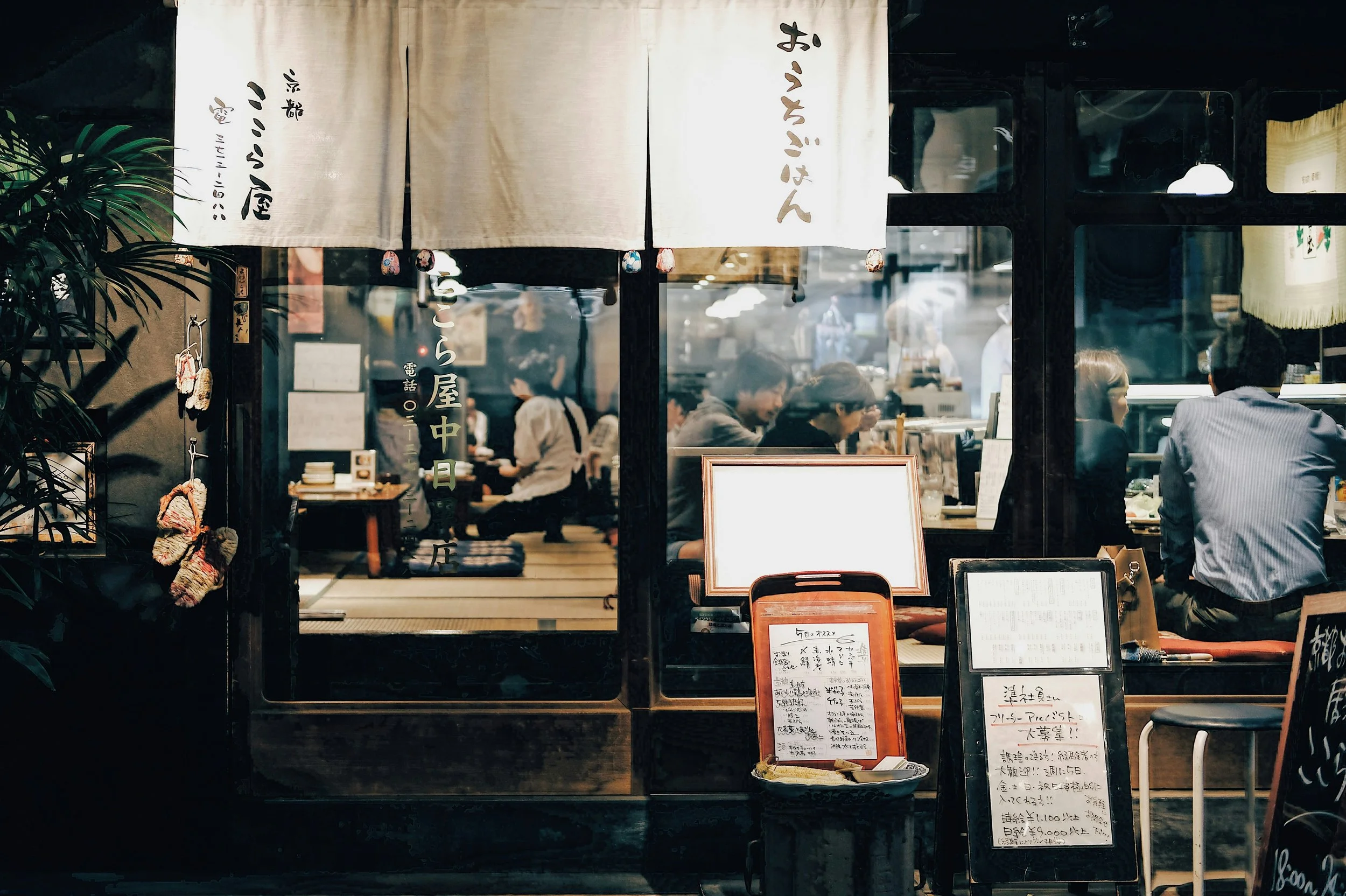
At Wild Herz, food is never an afterthought. When we travel, and in our guests' travel documents, a must-eat list sits alongside the must-sees. Meals are not simply nourishment; they are encounters. They can spark conversations you would never otherwise have: seated shoulder-to-shoulder at a tiny counter in Osaka, or sharing sake with a third-generation owner in Kanazawa.
Dining in Japan is about devotion: to craft, to technique, to seasonality. A single dish transforms as it moves across the country, shaped by climate and history. Ramen deepens in the north; seafood carries the taste of colder currents; even soy sauce shifts in balance depending on where you are. To eat your way through Japan is to read the country from the inside out, as culturally revealing as a morning at Sensō-ji or dusk along Fushimi Inari Taisha.
We design journeys around these moments: evenings in neighbourhood districts where lanterns glow against narrow lanes, introductions to family-run kitchens with no English sign, and seats at counters chosen as much for authenticity as for excellence.
In Japan, to travel well is to eat well; and to eat well is to understand.
The Dishes That Belong to Everyone
Japan's culinary identity is deeply regional but certain dishes belong to the whole country. You'll encounter them everywhere, and each version tells you something about where you are.
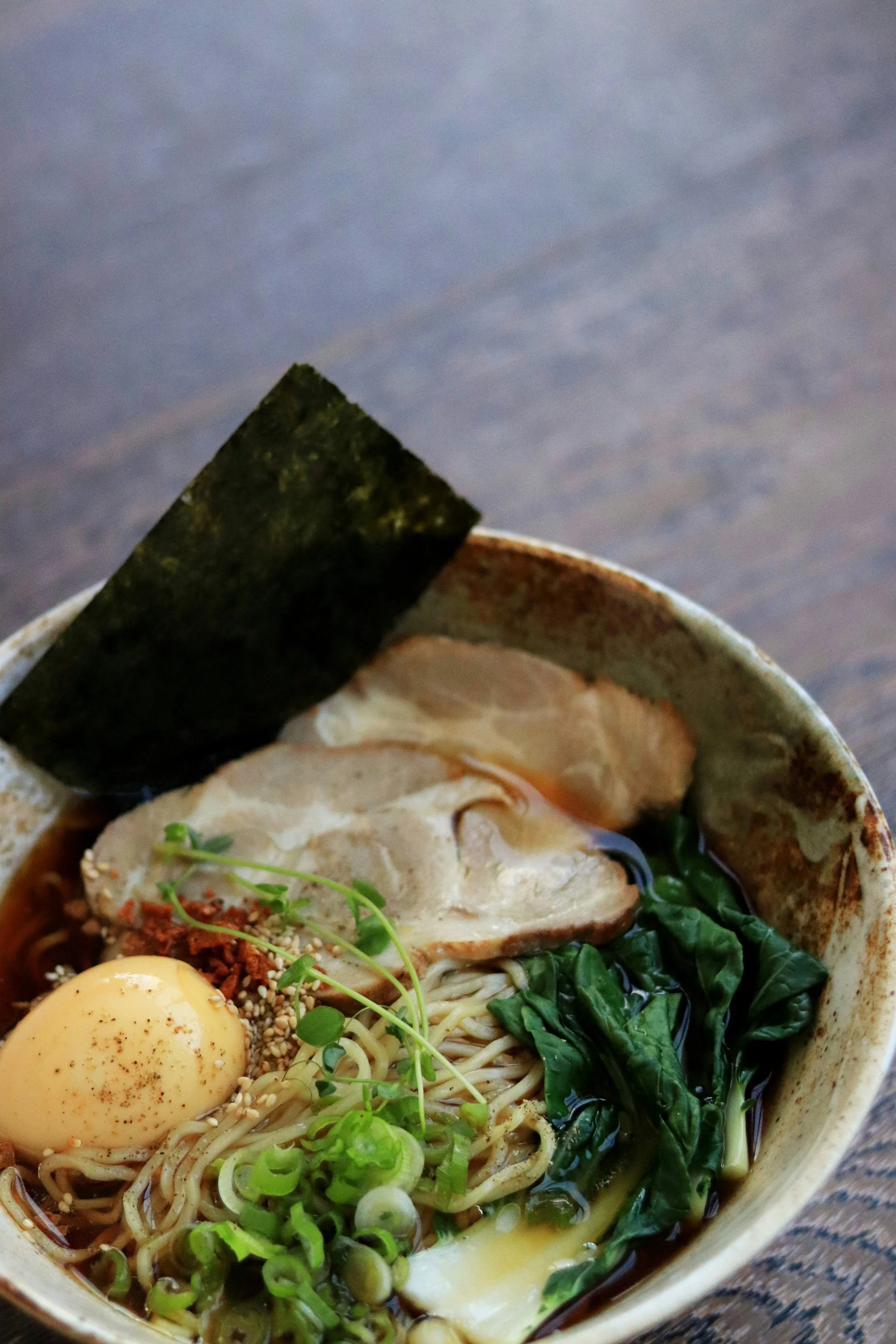
Ramen - The national obsession, found everywhere from late-night city counters to rural noodle shops, even at baseball stadiums, alongside beer and bento. Broths range from light soy to deeply savoury miso or rich pork tonkotsu, shifting character by region.
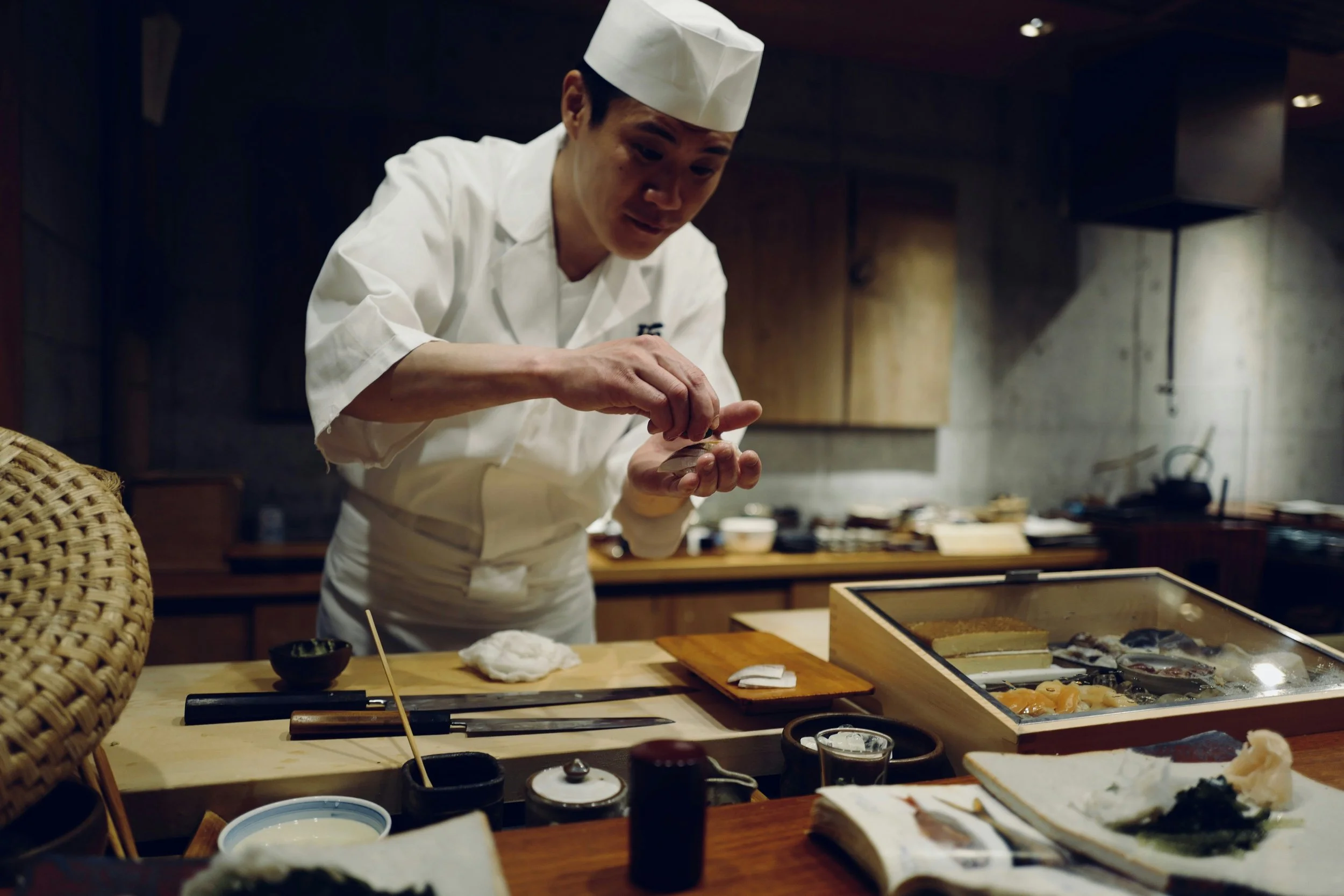
Sushi & Sashimi - Available everywhere, yet endlessly nuanced. Highly trained chefs spend years perfecting knife technique, rice temperature and timing. Prized cuts include otoro (fatty tuna belly) for its buttery richness, though purists often favour akami for its cleaner expression. Sit at the counter: every slice is deliberate, every movement economical.
Tempura - Seafood and vegetables fried in feather-light batter, refined over centuries into something approaching art. At the best counters, each piece is fried individually and placed directly onto your plate the moment it leaves the oil.
Udon & Soba - Japan's everyday noodles. Udon thick and soft; soba thinner, nuttier, often served chilled in summer. Each varies subtly between east and west.
Kaiseki - Japan's seasonal multi-course dining tradition, each course an edible expression of landscape and time of year. An absolute work of art.
Matcha Desserts - From traditional tea houses to train station concourses, matcha appears in cakes, parfaits and notably rich soft-serve ice cream, a modern echo of Japan's enduring tea culture.
A Journey by Region
Much like Italy, what you eat changes entirely as you move across the country. Below is your regional guide: the dishes to seek out and add to your must-eat list as you travel.
Tokyo: Technique Above All
The world's most Michelin-starred city is also one of its most thrilling for food. Tokyo runs on specialisation: a chef may dedicate an entire career to a single dish. Many of its finest restaurants seat fewer than ten guests and sit quietly within residential neighbourhoods, known only to those who know where to look.
Edomae Sushi — The Tokyo original. Fish cured, marinated or lightly aged using techniques dating back to pre-refrigeration Edo, each piece intensified in flavour and texture.
Tempura Counters — A front-row seat to precision cooking, ingredients fried and served one by one.
Tonkatsu — Thick pork cutlets in panko breadcrumbs, fried until crisp and served with shredded cabbage and tangy sauce. Deeply satisfying.
Depachika Food Halls — The basement floors of Tokyo's great department stores are temples to food: immaculate seasonal produce, regional delicacies, and every sweet and savoury item packaged with extraordinary care. Do not skip these.
Kyoto: Where Tradition Is Lived Daily
Japan's ancient imperial capital and the spiritual and aesthetic heart of the country. Kyoto moves at a different pace, with temples and wooden machiya townhouses around every corner and menus that change not seasonally but weekly. If Tokyo is about technique, Kyoto is about restraint and reverence.
Kaiseki — Kyoto is kaiseki's true home, the city where this refined, multi-course seasonal dining tradition first evolved. Served in historic wooden townhouses, it balances texture, colour and temperature in a way that feels more like theatre than dinner.
Yudofu — Tofu gently simmered in a light broth, eaten with minimal seasoning. A dish of remarkable simplicity, rooted in Zen Buddhist principles; the delicate flavour of Kyoto's exceptionally soft water does all the talking.
Yuba — The silky skin that forms on heated soy milk. Slightly sweet, served fresh, dried, or folded into soups. Quietly addictive.
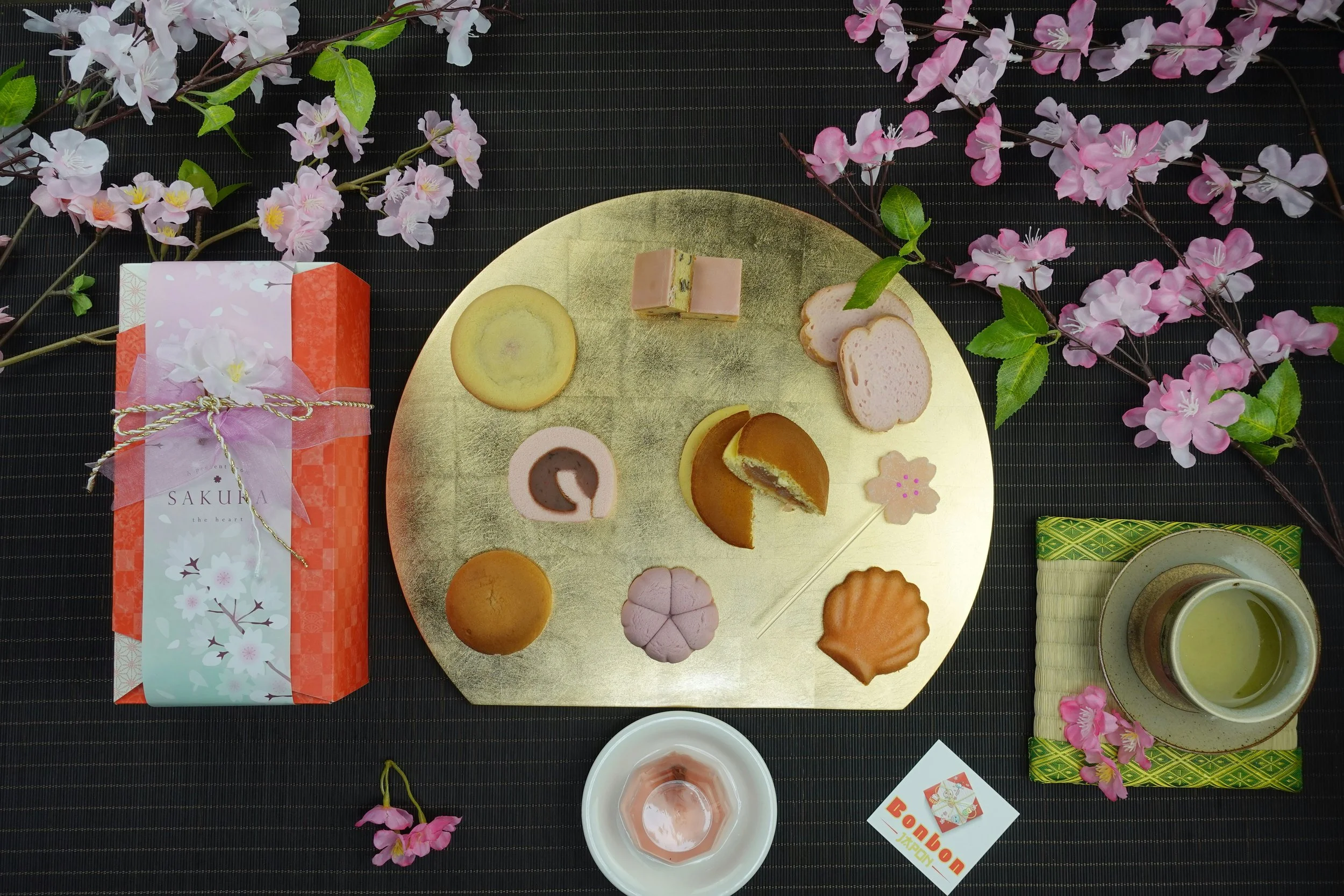
Wagashi & Matcha — Traditional sweets crafted to accompany matcha tea rather than overwhelm it: subtle in sweetness, shaped to reflect the season. Cherry blossoms in spring, maple leaves in autumn.
Takayama: Mountain Cooking, Mountain Craft
Tucked deep in the Japanese Alps, Takayama is one of Japan's best-preserved Edo-period towns, its wooden merchant streets virtually unchanged for centuries. The landscape here shaped everything; a cuisine built on fermentation, grilling and the deep flavours that cold mountain winters demand.
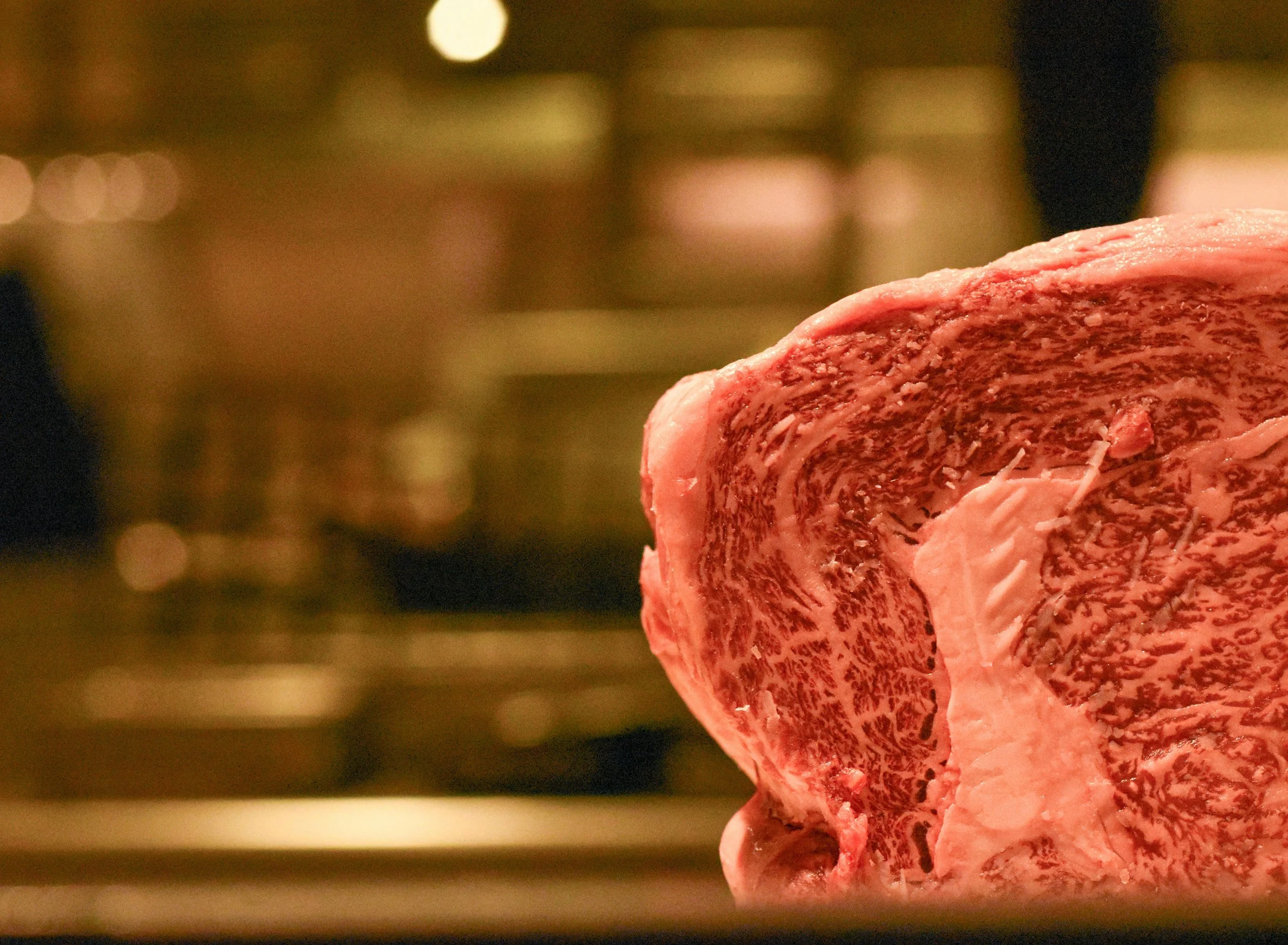
Hida Beef — A regional wagyu of exceptional quality, finely marbled, rich in flavour. Grilled over charcoal, lightly seared as sushi, or sliced thinly for hotpot. The mountains' answer to Kobe.
Hoba Miso — Miso paste grilled on magnolia leaves with mushrooms, scallions and sometimes thin slices of beef, the leaf imparting a subtle woodland aroma. One of Japan's great sensory experiences.
Salt-Grilled Ayu — Sweetfish skewered in a curved shape to mimic swimming posture, slowly cooked over charcoal and seasoned with nothing but salt.
Local Sake — Brewed using pristine alpine spring water, producing clean, crisp styles that pair beautifully with everything the mountains offer.
Kanazawa: Japan's Best-Kept Secret
Kanazawa is one of Japan's great overlooked cities, with samurai districts, geisha quarters, spectacular craft traditions and, thanks to direct access to the Sea of Japan, some of the country's finest seafood. Cold currents produce fish and shellfish of exceptional sweetness and texture.
Snow Crab (Zuwaigani) — Prized above all in winter (November to March), when the meat is at its sweetest. Worth planning a trip around.
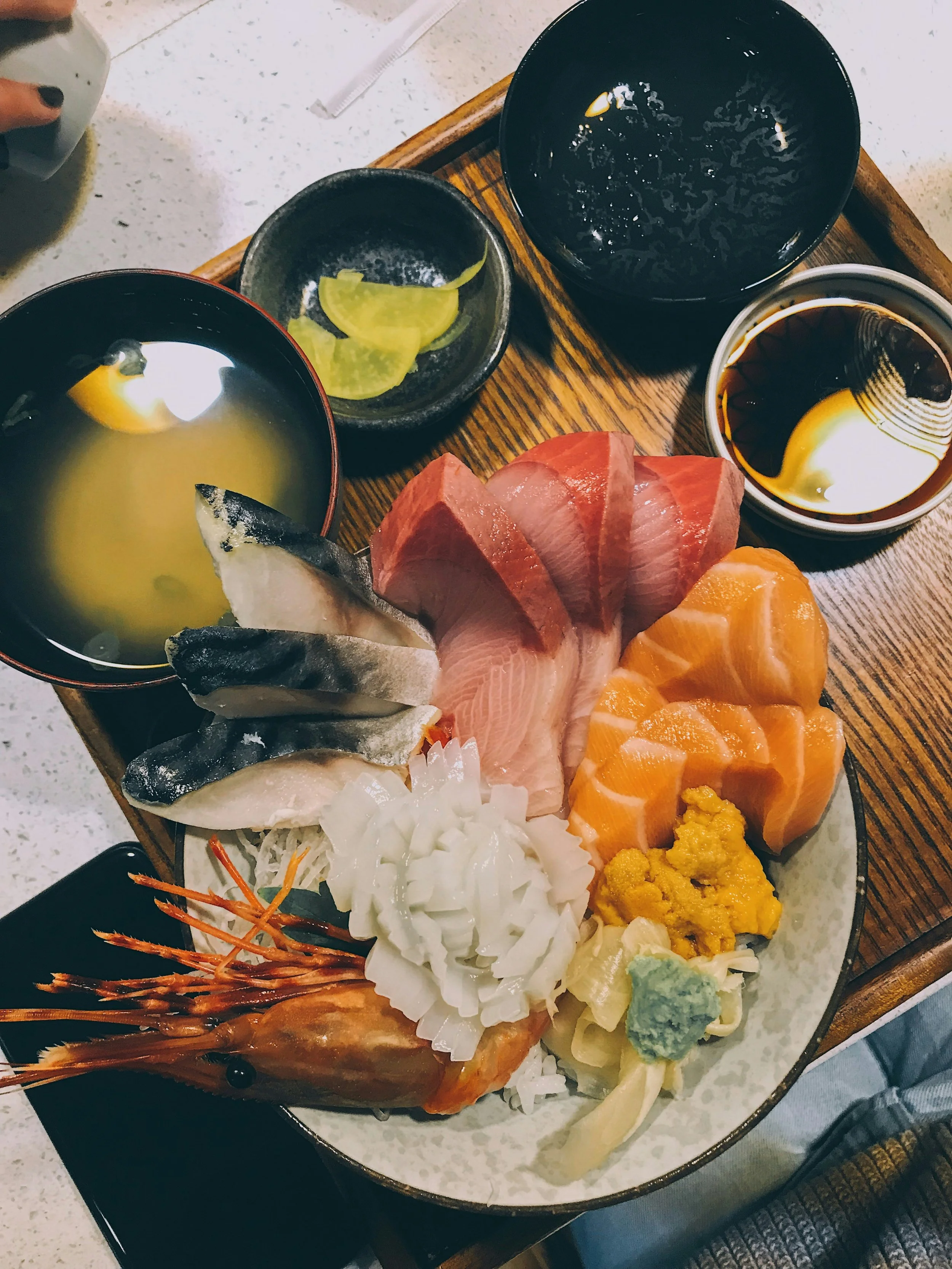
Kaisen-don — Bowls of rice topped with an assortment of raw seafood: whatever arrived at the morning's market. The freshness is startling.
Amaebi (Sweet Shrimp) — Softer and noticeably sweeter than typical prawns, served raw, the head fried until crisp. A Kanazawa signature.
Gold Leaf Ice Cream — Edible but tasteless, the gold leaf draped over desserts is a playful nod to Kanazawa's centuries-old gold craftsmanship industry. Theatrical and irresistible.
Hiroshima: Bold, Generous, Unapologetic
A city of extraordinary resilience and warmth, Hiroshima rewards those who explore beyond the Peace Memorial. Its food reflects a working-kitchen heritage: generous portions, bold flavours, nothing fussy. The surrounding Seto Inland Sea brings outstanding oysters and eel to the table.
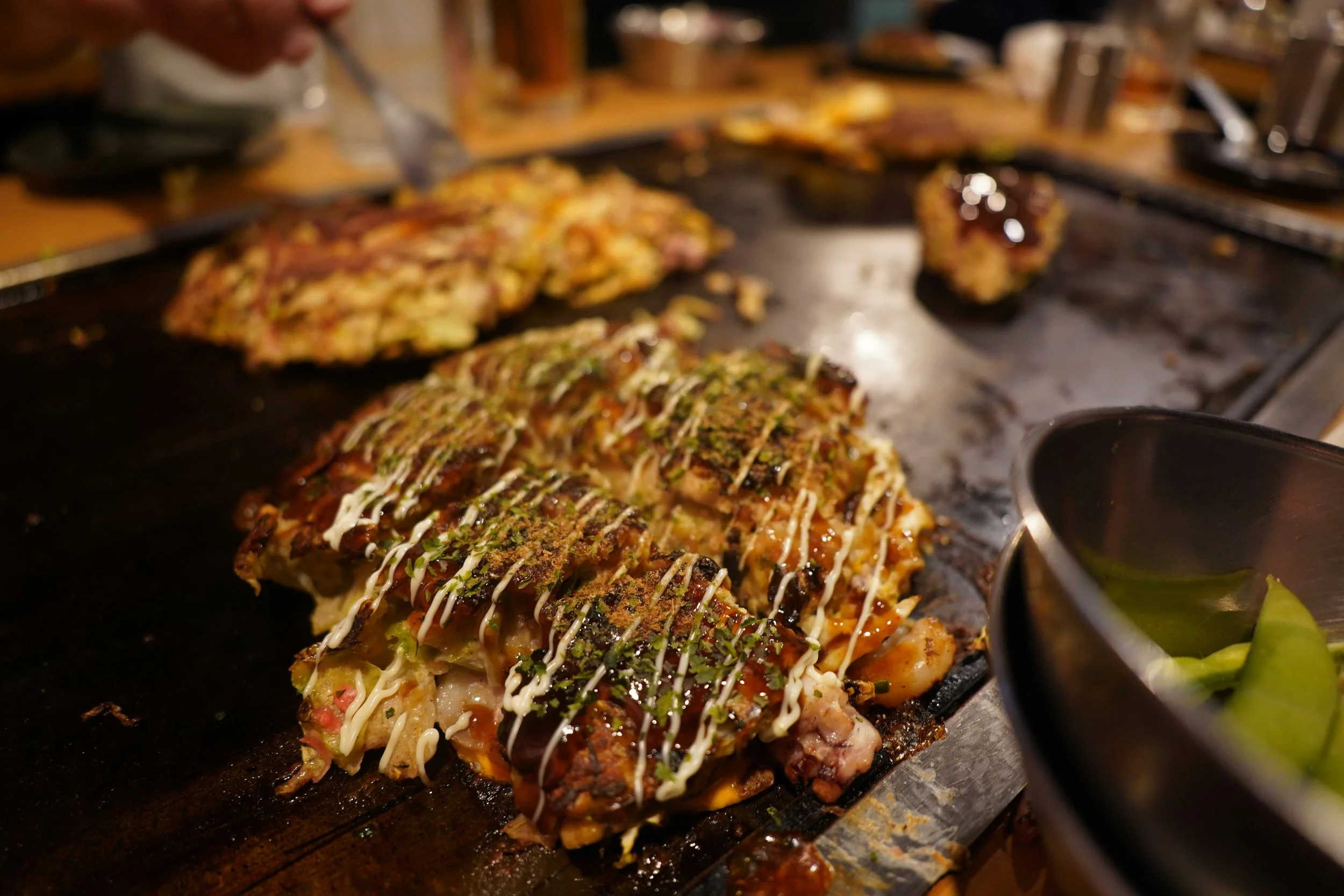
Hiroshima-style Okonomiyaki — Layered (not mixed) with cabbage, batter, pork or seafood and yakisoba noodles on a griddle, finished with savoury sauce, mayo, bonito flakes and seaweed. Hearty rather than delicate. This is comfort food, not health food, and all the better for it.
Oysters — Plentiful in winter (November to March), served grilled, fried or folded into savoury dishes. Among Japan's finest.
Anago (Conger Eel) — Grilled until tender and brushed with a lightly sweet sauce, often served over rice. A Hiroshima speciality that deserves wider recognition.
Setouchi Lemon — Bright citrus from nearby islands: cakes, sorbets, sparkling drinks, cutting cleanly through the richer dishes.
The Seto Inland Sea Islands: Cooking According to the Morning
Scattered between Honshu and Shikoku, the islands of the Seto Inland Sea feel like a different Japan entirely; slower, quieter, breathtakingly beautiful. Many are known for their contemporary art (Naoshima and Teshima among them), but the food is equally remarkable. Restaurant hours often depend on fishing conditions. Menus are shaped by what arrived that morning: straightforward, seasonal, quietly exceptional.
Sea Bream (Tai) — Served as sashimi or simply grilled. Associated in Japan with celebration, and for good reason.
Island Set Meals — Small seasonal plates centred on just-caught seafood and local vegetables. The essence of eating well without trying.
Olive-fed Amberjack & Wagyu (Shodoshima) — On olive-growing Shodoshima, both fish and beef are raised on a diet that subtly affects their flavour and richness. A genuine regional curiosity.
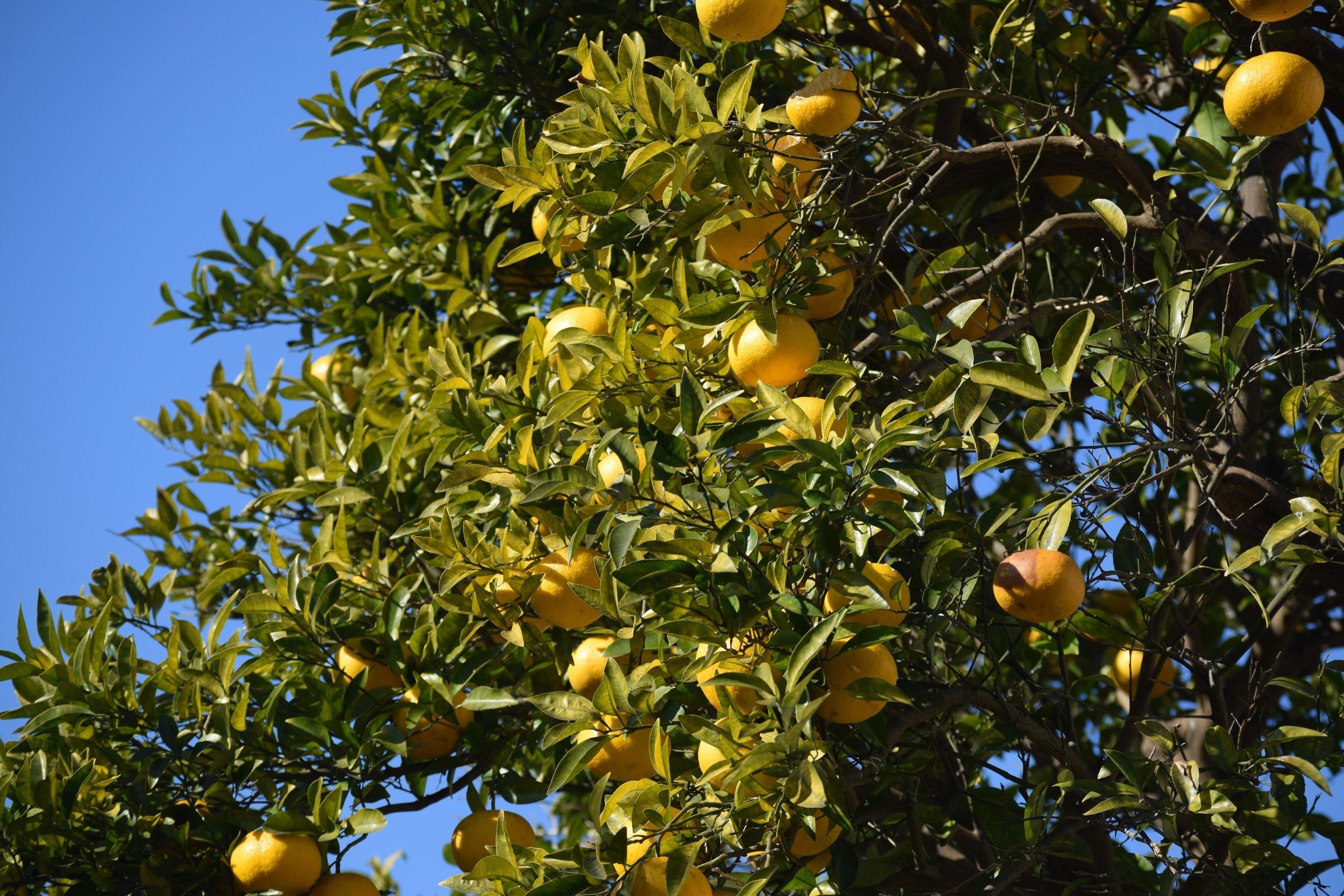
Citrus Dishes — Yuzu, sudachi and lemon used to brighten grilled fish and sashimi, the islands' sunshine on a plate.
Osaka: Food as a Way of Life
If Tokyo is where chefs go to perfect their craft, Osaka is where everyone goes to eat. Japan's self-declared 'kitchen' has always been a merchant city, and its relationship with food is unabashedly social. Dining happens outdoors and late, beneath the neon of Dotonbori, steam rising from griddles, queues forming for things that cost less than a coffee. Osaka will feed you extraordinarily well and ask nothing formal in return.
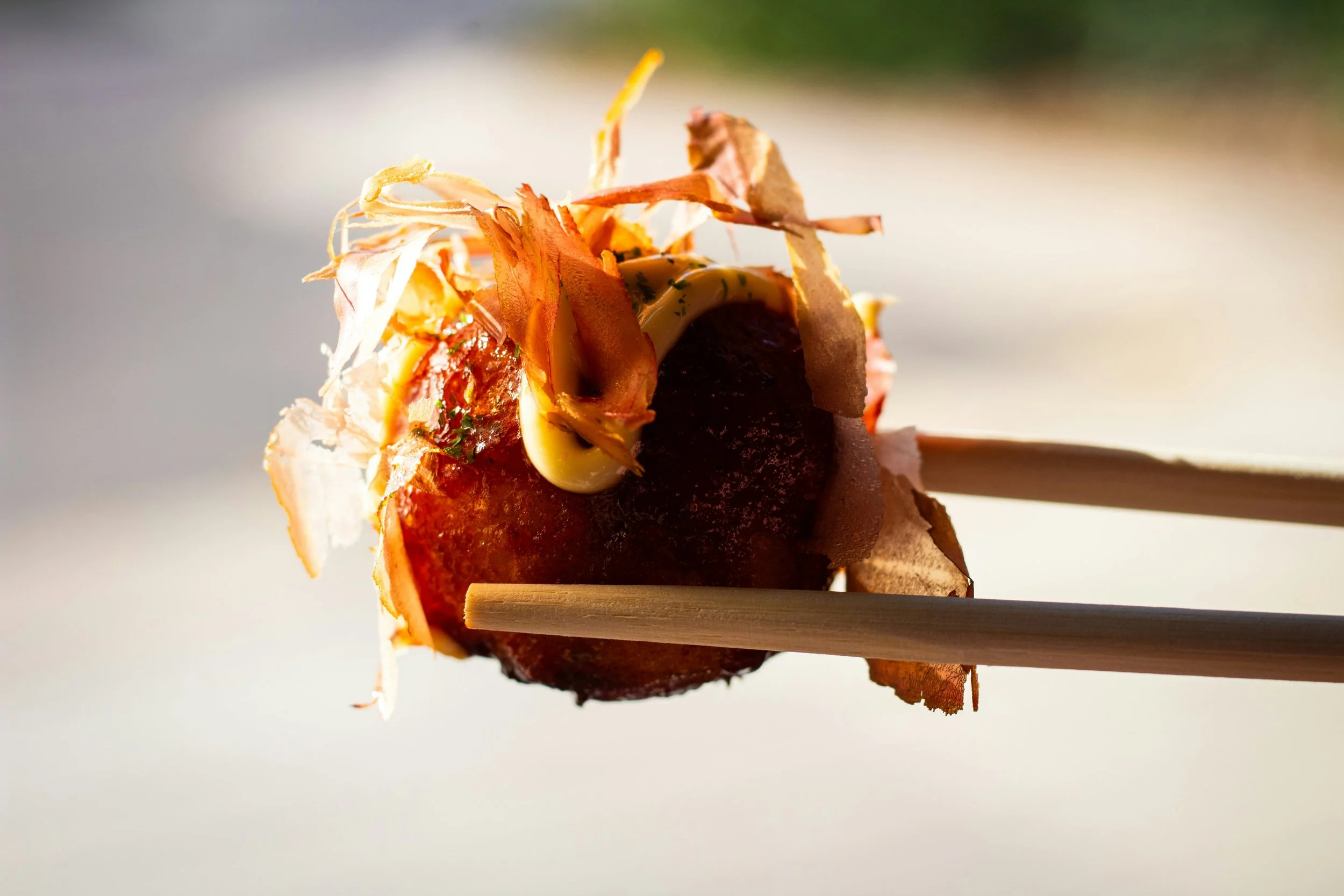
Takoyaki — Octopus-filled batter balls, turned continuously on hot iron plates and eaten straight from the paper tray, topped with bonito flakes that wave in the heat. The definitive Osaka street food.
Okonomiyaki (Osaka-style) — A cabbage-based savoury pancake cooked on a griddle and finished with sweet sauce, mayonnaise and bonito flakes. More relaxed than Hiroshima's layered version, endlessly debated between the two cities.
Kushikatsu — Breaded skewers of meat, seafood or vegetables, deep-fried and dipped once into communal sauce. (Once. The no-double-dipping rule is enforced with some seriousness.)
Shabu-shabu — Thinly sliced meat briefly swished in simmering broth at the table. Communal, convivial, and deeply comforting.
Sapporo: Northern Warmth
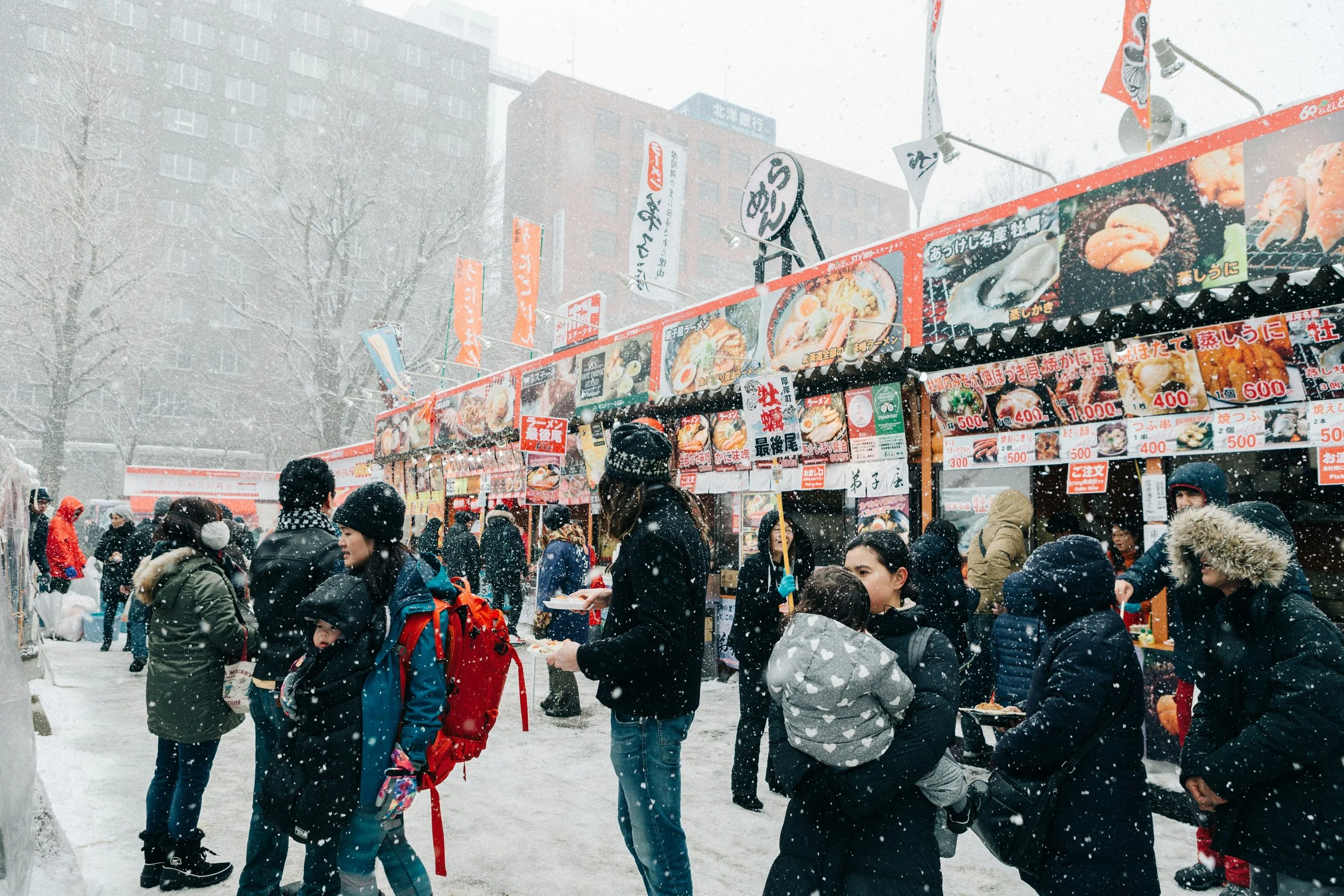
Capital of Japan's northernmost island, Hokkaido, Sapporo is a city built for winter, and its food shows it. Cold-climate dairy farming produces some of Japan's finest milk and cream; cold northern waters yield crab and scallops of extraordinary sweetness. When the snow falls and the temperature drops, Sapporo's kitchens come into their own.
Sapporo Miso Ramen — A hearty miso-based broth topped with butter, sweetcorn and pork. Rich, warming and deeply comforting. This is the dish the city was built for.
Soup Curry — A Sapporo invention: a spiced, fragrant broth filled with slow-cooked meats and seasonal vegetables. Somewhere between Japanese and South Asian, entirely its own thing.
Hokkaido Crab & Scallops — Cold waters mean exceptional sweetness. Eat them simply, and let them speak for themselves.
Hokkaido Soft-Serve — Exceptionally rich ice cream from the region's celebrated dairy. A queue-worthy ritual at any time of year.
*
In Japan, exceptional dining can absolutely be planned, and we make sure the right tables are reserved. But the most memorable meals are those understood in their proper context: the right neighbourhood, the right counter, the right introduction. That is what transforms a meal into something far more meaningful than simply what is on the plate.
This is what we do.
Talk to us about building your Japan journey, food first.